

News
Building a single-cell cancer atlas
Single Cell Discoveries’ CEO Mauro Muraro explains the role of his company in PERSIST-SEQ. ‘We offer the consortium one centralized place where all samples are processed and data is generated.’
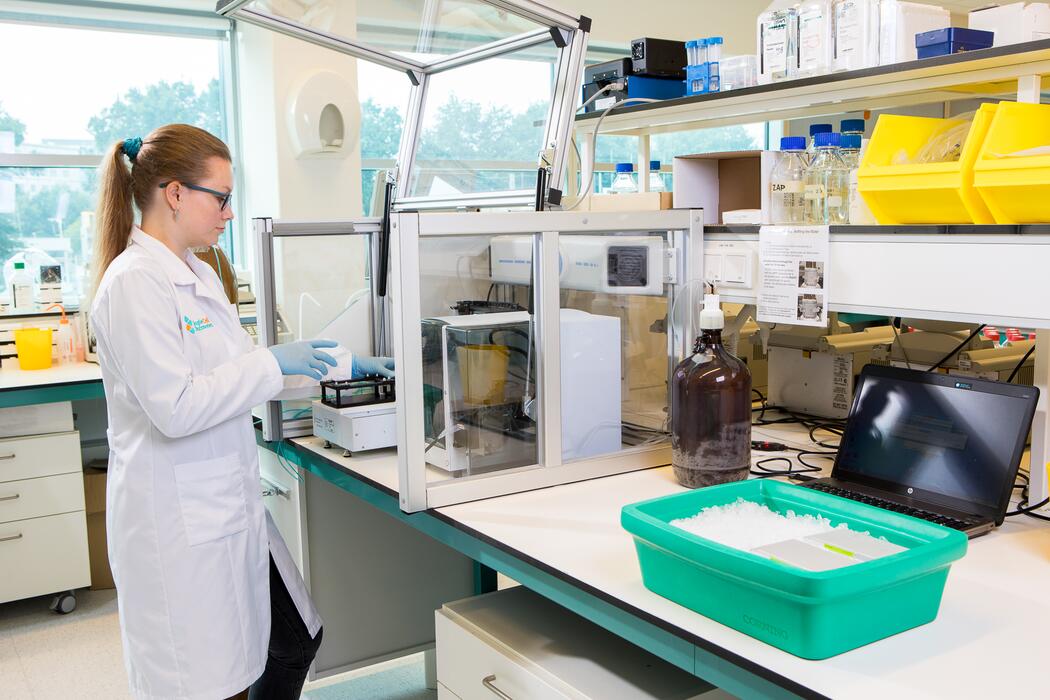
Being a start-up that spun out of the Hubrecht Institute in 2018, Single Cell Discoveries (SCD) made sequencing of individual cells available as a service to academic and commercial labs. The young company’s unique and much sought-after expertise makes it a valuable member within the PERSIST-SEQ consortium, which aims to find a standardized, reproducible workflow to sequence single tumour cells. The ultimate goal is to answer the question why some tumour cells escape treatment and thus contribute to tumour persistence.
Mauro Muraro, co-founder and CEO of Single Cell Discoveries, was a PhD student in the lab of single-cell pioneer Alexander van Oudenaarden at the Hubrecht Lab in Utrecht, where he already started developing automated techniques for single-cell sequencing. He reflects on the role of the young company within the PERSIST-SEQ consortium. ‘Our unique contribution is not only our expertise with single-cell sequencing experiments, but also our experience with data analysis and the logistics of handling samples from different labs efficiently. We offer the consortium one centralized place where all samples are processed and data is generated by staff trained to deal with single-cell projects, in a reproducible manner.’
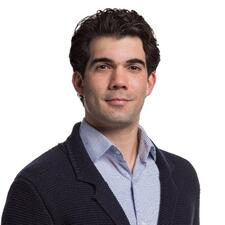
Mauro MuraroPeople will be able to look for their genes of interest and mine it for new hypotheses
When asked for the technologies SCD is going to use, Muraro mentions 10x Genomics, SORT-seq, VASA-seq and spatial transcriptomics. These technologies enable the team to find genetic information of single cells within a tumor, something that will yield invaluable information about expression level differences between normal cells, cancer treatment susceptible tumour cells, and resistant tumour cells. ‘Ultimately, our goal is to build a robust single-cell cancer atlas and analyze this wealth of data to find the signature of therapy resistant cells’, Muraro explains.
To define the biggest challenges for PERSIST-SEQ in general and SCD in particular, we have to look outside of the lab, Muraro explains. ‘Generating data is only the beginning. It will be an even more interesting challenge to make the data and biological interpretations sharable and browsable by the broader scientific community.’
Muraro is very positive about the collaboration with different stakeholder in PERSIST-SEQ. ‘These large collaborations with industry partners, government, and academia offer us a chance to learn from each other. If done effectively, bringing the best of all worlds together will let us interpret the data more efficiently than if every partner did this in isolation.’
If it all works out as planned, the project will be a valuable resource for the field, Muraro concludes. ‘People will be able to look for their genes of interest and mine it for new hypotheses. We see it as a goldmine of data that will be shared publicly with as many researchers as possible.’