

News
Clara Fauveau successfully defended her PhD on tumour persistence
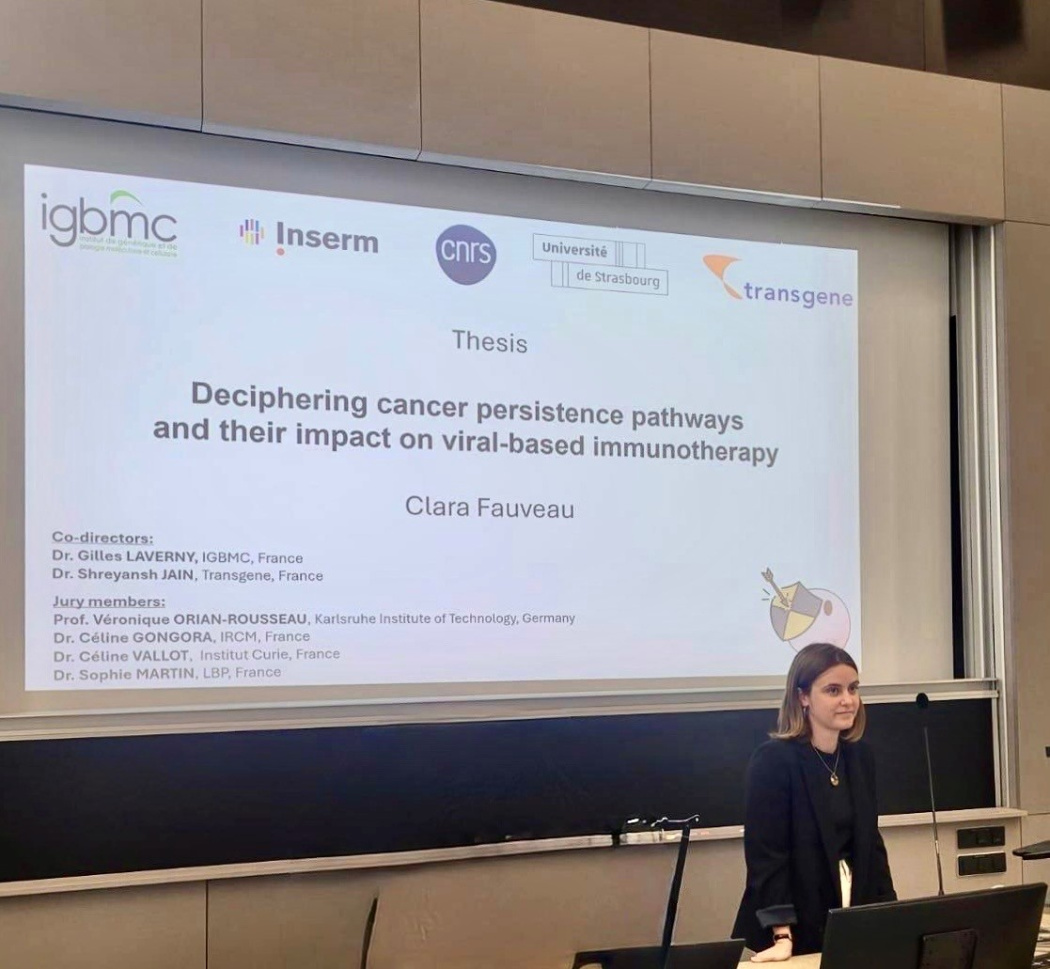
On the 30th of September, Clara Fauveau successfully defended her PhD thesis on tumour persistence. She pursued her PhD in the PERSIST-SEQ project through a collaboration between Transgene and the Institute of Genetic, Molecular and Cellular Biology (IGBMC) in Strasbourg, France.
For the last three years, Clara Fauveau was dedicated to her work on the PERSIST-SEQ project focused on the study of drug-tolerant persister tumour cells. Her PhD was a collaboration between the private company Transgene and an academic lab within the IGBMC. Under the supervision of Shreyansh Jain (Transgene) and Gilles Laverny (IGBMC), she delved into the molecular mechanism behind persistence and how oncolytic viruses can be used as a potential therapy in tumour persistent cells.
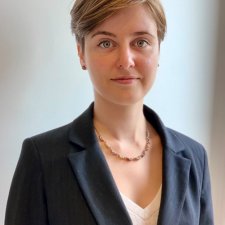
Clara FauveauBeing part of the PERSIST-SEQ consortium was very inspiring to me and an enriching experience.
Mechanism behind persistence
During her PhD, Clara developed 3D models derived either from tumoral cells lines or cells obtained from lung cancer patients. The 3D models, also called tumoroids, mimic the situation in tumours closer than conventional 2D cell culture model. Within tumoroids generated from patient cells, the tumour’s original features, such as heterogeneity and the tumour microenvironment are displayed. Therefore, the tumoroids Clara developed are a powerful tool to study drug persistence in lung cancer.
Clara studied persistence in the tumoroids after applying the lung standard of care chemotherapy, which was a combination of both Cisplatin and Pemetrexed. To better understand the mechanisms behind drug persistence, she used single-cell RNA-sequencing data of her 3D models from the PERSIST-SEQ consortium. With this technique the gene expression of individual cells can be analysed, providing insight in the cellular mechanisms and being able to visualise differences between persistent and non-persistent tumour cells as well as the heterogeneity between and within patients.
“My supervisors Shreyansh and Gilles are experts in the cancer field, single-cell RNA-sequencing, and oncolytic viruses. However, the field of tumour persistence was new to all of us. PERSIST-SEQ gave me access to leading experts in the field, who could help me with my experiments and the development of the 3D model. Being part of the PERSIST-SEQ consortium was very inspiring to me and an enriching experience.”
The potential of oncolytic viruses
Parallel to her work on tumour persistence in 3D lung cancer models, Clara investigated the potential of oncolytic viruses as a treatment of persistent tumour cells. Oncolytic viruses are an emerging type of therapy that uses genetically modified viruses to target cancer cells. Transgene produces these engineered oncolytic viruses.
Oncolytic viruses are engineered to selectively replicate in and kill tumour cells. In addition, they can be designed to hijack the host cell’s protein production machinery, leading the tumour cell itself to produce and release therapeutic payloads that target neighbouring tumour cells or modulate the tumour microenvironment. In her research, Clara observed that the oncolytic viruses are efficient in both persistent and non-persistent tumour cells.
Nearly all patients face resistance against one or more chemotherapies at some point in their treatment. Effective treatment is not always available for these patients, and the consequences can be severe and even cause patients to die. Oncolytic viruses represent a potential new therapy for the persistent tumour cells and could be further engineered to produce locally anti-persister therapeutics, thereby reducing risks of systemic side effects.
Clara’s next steps
Up to now there is no consensus biomarker available that show clinicians and researchers whether persistence has occurred in a tumour. Furthermore, the underlying mechanism for the development of persistence remains unclear. Treating or, even better, preventing persistence in tumours could make treatment of cancers with already existing drugs stay effective and hopefully decrease the mortality rates. PERSIST-SEQ is the first coordinated effort to try to standardise the workflow to generate multiple data sets studying tumour persistence and potential biomarkers.
Clara will continue her work in a post-Doc position at IGBMC looking further into the data she generated during her PhD on persistence in patient-derived models. A complicating factor in the discovery of biomarkers for persistence is the heterogeneity observed between studies. Clara’s upcoming work will be the first to investigate how patient-specific tumoral heterogeneity influences the persistent signature, potentially bringing research into this topic further.
By combining advanced 3D tumoral models with the collective expertise of the PERSIST-SEQ consortium, Clara contributed to define persistence in lung cancer and uncovered new therapeutic opportunities using oncolytic viruses. Her work and the one of PERSIST-SEQ, illustrates a promising new direction in oncology: rather than developing ever more potent anti-cancer drugs, understanding and targeting persister cells, responsible for relapse, could be the key to eradicating cancer.