

News
Exploring Transcriptomics to Reveal the Roots of Therapy Resistance in Cancer
One of the biggest challenges in cancer treatment is understanding why some tumour cells withstand therapy and go on to relapse. Within the PERSIST-SEQ project, researchers are combining powerful experimental models with advanced analytical technologies to uncover the molecular changes that allow certain cells to tolerate treatment and evolve into resistant disease.
A central approach in this effort is single-cell transcriptomics, which is a method that measures gene activity at the level of individual cells. By capturing the expression patterns of thousands of genes across hundreds or thousands of cells, transcriptomics provides a detailed picture of how cells function, interact, and adapt under drug pressure.
In PERSIST-SEQ, transcriptomics is used not just to describe cell states, but to connect them to biological processes, communication networks, and potential vulnerabilities that may be exploited therapeutically.
Capturing Cellular Diversity Across Tumour Models
Cancer is not uniform and even within a single tumour, neighbouring cells can behave very differently. Bulk sequencing methods average signals across all cells, potentially missing rare but clinically significant subpopulations. Single-cell RNA sequencing (scRNA-seq) overcomes this limitation by profiling the gene expression of each cell individually.
Within PERSIST-SEQ, scRNA-seq enables researchers to:
- Detect rare persister cell populations
- Characterise transcriptional heterogeneity among cancer and microenvironmental cells
- Compare expression changes before treatment, during minimal residual disease, and at relapse
- Distinguish between inherent and acquired mechanisms of resistance
This approach is applied across multiple experimental systems, from 2D cell lines and co-cultures to patient-derived organoids, patient biopsies, and xenograft models.
Integrative Transcriptomics: More Than Just Gene Expression
Transcriptomic data in PERSIST-SEQ is integrated with other layers of information, including epigenomic and spatial biology data. This allows researchers to assess not just which genes are active, but where those cells are located and how their regulatory programs are shaped by chromatin structure and microenvironmental context.
By bringing these modalities together, the project gains a more holistic view of tumour biology by considering gene expression, cell state, spatial relationships, and epigenetic control.
Spatial Transcriptomics: Context Matters
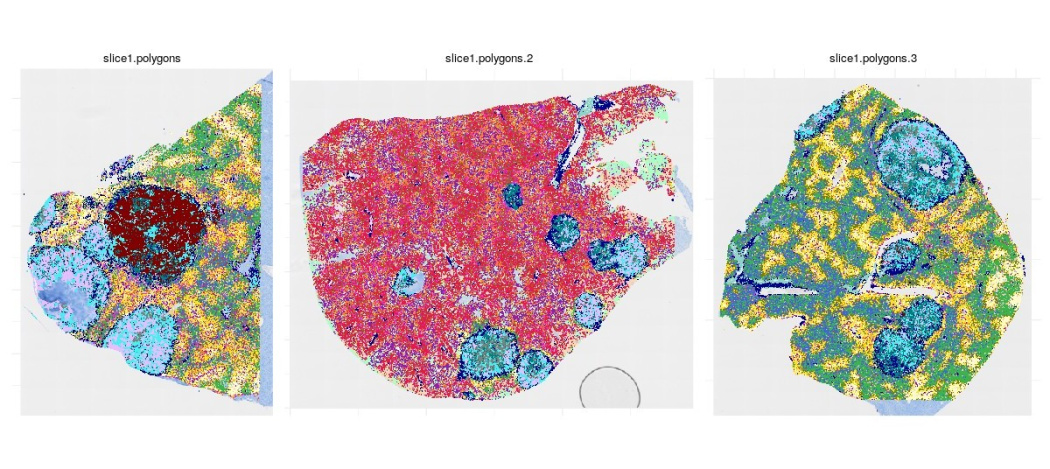
In addition to profiling isolated cells, spatial transcriptomics preserves information about a cell’s physical location within tissue. This is critical when studying drug tolerance, because surviving cells often depend on signals from neighboring cells or specific microenvironmental niches.
Through spatial transcriptomics, PERSIST-SEQ researchers can:
- Map cell–cell communication networks
- Identify specific ligand–receptor interactions involved in persistence
- Discover how tissue architecture contributes to resilience under therapy
This spatial dimension adds depth to transcriptomic insights, revealing not just who the persister cells are, but where they are and how they interact with their surroundings.
From Molecular Patterns to Therapeutic Hypotheses
The integration of transcriptomic data enables researchers to move beyond description toward hypothesis generation. PERSIST-SEQ teams can pinpoint molecular mechanisms that underlie drug tolerance and resistance by:
- Mapping differentially expressed genes onto known pathways
- Identifying signaling hubs and bottlenecks with graph-based approaches
- Using unsupervised clustering to define resistance subtypes
- Applying trajectories and pseudotime analyses to track dynamic cell states
Sharing Data and Tools with the Scientific Community
As part of PERSIST-SEQ’s commitment to open science, all transcriptomic datasets and analytical tools developed within the consortium will be shared alongside their corresponding publications. This ensures that the broader research community can leverage these resources to advance our collective understanding of tumour resistance and therapeutic response.
By uniting single-cell transcriptomics, spatial biology, and integrative analytics, PERSIST-SEQ is building a comprehensive framework for understanding therapy resistance and accelerating the path toward more effective, durable cancer treatments.