

News
Modelling therapeutic resistance in cancer
PERSIST-SEQ aims to provide an understanding of resistance to therapeutic treatments in cancer patients. Unfortunately, this is an unresolved problem commonly encountered in the clinic. It causes high mortality rates across different cancer types. Therapeutic resistance in cancer is currently difficult to predict, prevent or treat, and is also a major cause of failure in the drug discovery and development process. The PERSIST-SEQ project aims to tackle the problem of therapeutic resistance through various angles by bringing together leading researchers and medical oncologists, cancer modelling approaches and single-cell sequencing techniques.
One of the partners in the PERSIST-SEQ consortium is the Institute for Research in Biomedicine Barcelona (IRBB) - a biomedical research centre which offers pioneering solutions to unmet medical needs in cancer and other diseases by conducting multidisciplinary research. On IRBB’s role in PERSIST-SEQ, Dr. Eduard Batlle, head of the Colorectal Cancer laboratory at IRBB, shares:
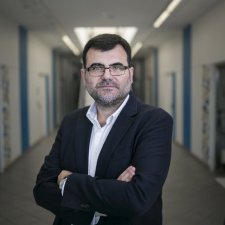
Eduard BatlleThe IRBB laboratory has developed human-like “state of the art” experimental models of advanced colorectal cancer that will aid to model therapeutic resistance in the lab. By using these models PERSIST-SEQ researchers can provide an extra source of novel information that could be validated in the data obtained by sequencing human samples as well as vice versa. This way, PERSIST-SEQ researchers can experimentally model and confirm hypothesis built from sequencing data obtained from cancer patients.
Singe cell sequencing
“PERSIST-SEQ is a frontier project that combines several cutting-edge technologies. The most prominent is single cell sequencing - a collection of powerful techniques that allow researchers to learn what happens in each tumour cell individually and at multiple levels. For example, amongst the various types of sequencing that will be carried out within PERSIST-SEQ, single cell RNA sequencing will reveal the genetic information used by each individual cell. The resolution and the information that can be obtained with this technique is incredibly revealing of the mechanisms operating within each cell in the tumour, and how they are modulated upon therapy. Researchers can see which cells disappear, which remain, and obtain information regarding how these remaining cells manage to escape therapy.” - Dr. Batlle explains.
Tumour organoids
Another powerful technology that the IRB laboratory is exploiting are tumour organoids. Dr. Batlle explains: “Tumour organoids are 3D cultures derived from cancer samples that can be maintained indefinitely in the lab under specific conditions. Tumour organoids are enriched in cancer stem cells, and when they are implanted in syngeneic mouse models, they reproduce the complexity and the heterogeneity of the cancer from which they originated. Therefore, researchers consider them as avatars of the tumour of origin. Growing tumours on a petri dish in the lab allows for modification with genetic editing techniques, another cutting-edge technology used in PERSIST-SEQ."
For instance, researchers can delete genes they hypothesize are important for therapy resistance. They can also introduce fluorescent cassettes under the control of a gene that will label a specific cell population in the tumour deemed resistant to therapy, and check through fluorescence whether this is the case. Moreover, researchers can insert in the genome of the tumour cells so-called “tracing cassettes” that allow them to follow the descendants of a particular cell. Another strategy that is very useful is to insert a “suicidal cassette” under the control of a gene that labels a specific cell population in the tumour. Through the addition of a compound, researchers can activate the cassette at will, which will cause the death of the cells bearing it. These experiments provide proof of concept regarding whether researchers can overcome therapeutic resistance by targeting a specific cell population of the tumour. Altogether, this information will represent the basis for the future development of novel therapies that will be more efficacious towards cancer.”
How will these technologies help explain therapy resistance in cancer?
Dr. Batlle explains: “Resistance to drugs can arise through various mechanisms, and they are not exclusive of one another. For example, drug resistant cells could already pre-exist in tumours, and they become selected upon chemotherapy or radiotherapy, because all the other cells die. Yet cells within the tumour can also acquire drug resistance as the treatment is applied, by resourcing to mechanisms that allow them to tolerate the drugs. This is called “acquired resistance”, and can involve, for example, making extensive use of pumps that expel the drug from the inside of the cells. All these aspects will be considered and investigated in PERSIST-SEQ, and researchers expect to reveal novel mechanisms that they cannot anticipate at this point, but that PERSIST-SEQ research will unravel."
Exciting results underway
In fact, researchers at IRBB are beginning to obtain some very exciting results. Their lab has been studying cancer stem cells and their connection with the biology of stem cells in the normal intestine. Dr. Batlle elaborates: “Normal stem cells in the intestine regenerate the complete inner layer of the intestinal wall every 3-5 days. Hence, they are endowed with an enormous regenerative potential.” Over the years, scientists have learned that colorectal cancers have tumour cells with properties similar to the intestinal stem cells, which endow them with high regeneration potential as well. Therefore, the IRBB lab is initially focusing on such pre-existing cells within the tumour that exhibit a high regenerative capacity.
By employing organoids, single cell RNA sequencing and gene editing techniques, scientists have discovered that amongst the cancer stem cells there are two cell populations. “One type of cancer stem cells that actively divides and fuels tumour growth while there is no treatment, and a second stem cell population that under normal conditions remains latent and quiet, and doesn’t do much but persist. As these cells do not divide actively, conventional therapies that usually target cells that divide are not efficacious towards this particular population of cancer stem cells.”, Dr. Batlle explains.
Scientists have learned that they can distinguish these cells by using a gene called Mex3a. By manipulating the genome of these cells with genome editing techniques to label these cells, researchers have observed how they resist conventional therapies commonly used to treat colorectal cancer (Folfox, Folfiri). Dr. Batlle explains: “We have also observed that the cancer cells that form the newly appeared tumours after therapy, arise from these Mex3a labelled cells.” Single cell RNA sequencing techniques help understand resistance mechanisms and their reactivation after therapy. These results, that are partially financed through the PERSIST-SEQ project, will be published in the journal Nature Cancer.
Importance of PERSIST-SEQ for cancer research
Dr. Batlle: "Our expertise lies within the study of colorectal cancer. Yet many of the findings we have made in the past in this particular type of cancer have shown parallelisms in other types of cancer. We have already identified the therapy for resistant cancer stem cells that can be distinguished by Mex3a cells in human patients with colorectal cancer. Once PERSIST-SEQ obtains new data on human samples from other types of cancer patients, we can look for the presence of cancer cells with similar properties. We will be able to explore whether they resource to equivalent mechanisms to reactivate after therapy or, alternatively - identify novel aspects specific for each tumour type. Also, our preliminary results indicate that the presence of these cells in tumours from patients with colorectal cancer may help identify those at higher risk of disease relapse after therapy. We will explore whether this is the case in other cancer cell types."
Dr. Batlle enjoys developing all the research projects carried out in his laboratory, including PERSIST-SEQ. He shares: “The research we perform is very close to the problems encountered in the clinic, and often discoveries made in our lab will have a direct result or translation into the patients’ lives. Carrying out research in these aspects that may give rise to novel therapeutic strategies to treat patients is something I particularly like, because it is very rewarding. If you ask me specifically for something more tangible, I would pinpoint that very moment when you obtain an important result from an experiment that you immediately know will have far-reaching implications. That is what we call an “Eureka” moment.”