

News
Multi-omics approaches to unravel unexpected alterations related to tumour and single cell phenotypes
One of PERSIST-SEQ’s principal investigators is Héctor Garcia Palmer, Head of the Stem Cells and Cancer Group at the Vall d’Hebron Institute of Oncology (VHIO) - a research centre for personalized medicine in oncology. Scientists at Palmer’s lab study the mechanisms that allow tumours to resist effective treatments and to progress to advanced stages where patients’ lives are at risk. His team uses multi-omics approaches (combining analysis of data sets of different omics groups such as genome, proteome, transcriptome, epigenome, and microbiome) to reveal unforeseen alterations related to tumour phenotypes.
The Vall d’Hebron Institute of Oncology (VHIO) brings together the basic, clinical and translational oncology research activities at the Vall d’Hebron University Hospital (HUVH) campus, and aims to respond to the challenges at the forefront of oncological research. HUVH is the largest public teaching hospital in Barcelona and one of the largest hospitals in Spain. As a research centre, VHIO is involved in the cutting edge of cancer knowledge development at European level. This includes state-of-the-art technologies for molecular pre-screening and stratification of patients, as well as generation of state-of-the-art patient derived mouse models with paired clinical samples.
Palmer’s group at VHIO couples gene editing (CRISPR/Cas) with classical signalling biochemistry in cancer cell lines as well as genetically modified mice, patient-derived organoids and xenografts (PDX) to study the functional relevance of these newly identified alterations in patients’ response to treatments. Since the group is also part of a global multidisciplinary task force that include oncologists, surgeons, radiologists and nurses, laboratory results have a rapid clinical interpretation and translation to patients’ benefit.

What is the focus of your work within the PERSIST-SEQ project?
“We will focus our investigations on persistent colorectal cancer (CRC) in response to BRAF inhibitors. We will perform a comprehensive study including the analyses of patients´ samples, PDX, PDO and genetic mouse models of CRC.
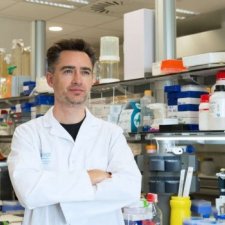
Héctor Garcia Palmer, VHIO, PERSIST-SEQ PI, Lead WP4PERSIST-SEQ will aid to reveal how the intra-tumoral cell heterogeneity in CRC is relevant for the acquisition of resistance to BRAF inhibitors. We aim to discover alterations that could be targeted with new matched therapies for fighting against the CRC persistence.
Another part of our work will focus on investigating the biological heterogeneity within the slow cell cycling population present in CRC tumours. This is relevant since these cells are intrinsically resistant to many anti-proliferative drugs.”
What do you hope to contribute to the consortium?
“We aspire to provide new insight into the mechanisms of drug resistance and persistence in CRC. Our unique contribution will be to analyse samples from cancer patients and generate real patients´ data.”
What do you enjoy the most about your work on the project?
“I enjoy learning from the best experts in Europe about all the possibilities brought about by single cell technologies. In addition, the close collaboration with Pharma industry will allow us to translate our findings into development of future solutions for cancer patients.”
What is challenging about your work?
“The most difficult aspects of our work have to do with the limitations of processing and analysing the samples from patients´ biopsies. This occurs because cells are fragile and in limiting numbers.”
How will PERSIST-SEQ contribute to the wider field of cancer research?
Héctor Garcia Palmer, VHIO, PERSIST-SEQ PI, Lead WP4The scale and size of PERSIST-SEQ will provide a first large collection of single-cell sequencing data to the scientific community. This could revolutionize the understanding of treatment resistance in cancer and provide industry, academia, clinicians and patients with novel therapeutic solutions.