

News
Novel models to improve the representation of recurring patient tumours
PERSIST-SEQ aims to develop standardised approaches to single-cell sequencing in order to investigate and characterise drug resistance in tumours. The role of HUB Organoids (HUB) in the project is to develop novel models that better represent recurring patient tumours. Advanced preclinical models are needed to improve our understanding of tumour resistance to drug treatments. To that end, researchers at HUB seek to develop models that are enriched in persistent tumour cells to facilitate their analysis with the consortium sequencing workflows.

HUB Organoids HUB
HUB Organoids (HUB) was founded by the Royal Dutch Academy of Science and University Medical Center Utrecht, The Netherlands. HUB is the global centre of excellence for adult stem cell-derived organoid technology, translating and implementing the technology originally developed by the laboratory of Prof. Hans Clevers at the Hubrecht Institute, to preclinical and clinical applications. HUB generates ‘Living Biobanks’ of multiple diseases including cancer and cystic fibrosis.
Moreover, HUB licenses its proprietary technology and offers contract research drug screening and model development services to the pharmaceutical industry. HUB and their partners are performing clinical organoid validation trials to demonstrate that HUB Organoid Technology can be used as a predictive and diagnostic tool for personalized medicine. HUB was specifically launched to implement and innovate Organoid Technology at a large scale and has since generated nearly 1,000 models and implemented state‐of‐the‐art solutions for all technical, logistical, and ethical aspects of organoid biobanking.
HUB organoids
HUB Organoids® are patient-derived “mini-organs in a dish” developed using a patent protected technology (HUB Organoid Technology) based on extensive knowledge of adult stem cell biology and unique expertise in model development that allowed HUB to build a large organoid biobank maintained at industry standards. As a Company participating in the PERSIST-SEQ project, HUB contributes to the development of robust patient-derived organoid (PDO) cell isolation protocols for RNA-seq analysis and provides novel PDOs models from persistent tumours. PDOs developed from different cancers such as colorectal, pancreatic, or breast have already shown a predictive value for patient response in the clinic. Predicting innate drug resistance or modelling acquired drug resistance in the lab represent significant added values to the PDO platform that can greatly benefit the scientific community.
Identifying drug resistant tumour cells
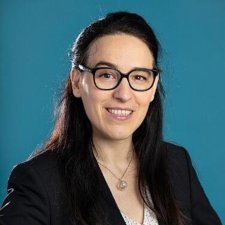
Dr. Sylvia Boj, HUB Organoids, PERSIST-SEQ Principal InvestigatorThe PERSIST-SEQ consortium counts on world leaders in single-cell sequencing, from academia and industry; therefore, I do no doubt that we will be able to develop robust workflows for single-cell RNA-seq analysis to help us understand what genes are altered in drug-resistant tumour cells.
However, due to intra-tumour heterogeneity, the identification of the cell - or pool of cells - driving drug resistance is still a major challenge. Additionally, genomic driven approaches to treatment selection alone have led to poor translatability to patients, indicating that the complexity of tumours pathophysiology in vivo is much higher than anticipated and requires a combined approach with models that represent avatars of patients in the lab. This is where PDOs can significantly contribute as clinically relevant preclinical models that can be developed from any patients and can be maintained in the lab under specific culturing conditions without compromising the original tumour identity. PDOs can then be used to test hypothesis for persistent tumour cell targeting to generate a physiologically relevant patient-like response data.
Better treatment for cancer patients
“Working with leading experts with such a diverse set of expertise is gratifying. I am also driven by the conviction that our efforts will lead to better treatments for cancer patients. This is my greatest motivation and the reason why I show up consistently with my team and in my job. The question of how cancer cells “evolve” over time under treatment pressure is compelling and has been at the centre of cancer studies for decades. We are now a step closer to answering this question and I see the added value that PDOs can bring as clinically relevant models, which is exciting.” – Dr. Boj says.
Challenges for PERSIST-SEQ
Dr. Boj explains that the challenge is manifolds: “First, we need to identify clinically relevant phenotypes for drug-resistant tumour cells in vivo. Secondly, we need to evaluate whether we can recapitulate these phenotypes in the lab using PDO models. This may require optimisation of protocols and new culture conditions that preserve and perhaps enrich our organoids in persistent cells so that we can provide the means for the downstream characterisation by sequencing. Finally, we need to verify our initial hypothesis, which means testing whether a pharmacological intervention targeting specifically persistent cells in the context of a heterogenous tumour organoid results in significant tumour growth inhibition, either alone or in combinations with new or existing treatments. This last step is critical as it demonstrates the clinical translatability of our data to patients and represent the core of our work at HUB.”
Contributions to the cancer research community
“Treatment resistance either innate or acquired remains the main reason for treatment failure in the clinic. The protocols and strategies to identify, isolate, and characterize persistent tumour cells developed by the PERSIST-SEQ consortium will accelerate and open new directions to address the same phenomenon in any human cancer and will improve patient outcomes across multiple tumour indications”, Dr. Boj elaborates.