

News
PERSIST-SEQ consortium members meet in Strasbourg to discuss work progress and plans for the next period
The second annual PERSIST-SEQ meeting took place on the 30th of June in Strasbourg, France. The event was organised in a hybrid setting and gathered 40 project members in person, and the rest – online. Researchers from various work streams and project managers discussed the progress of their work, shared challenges and discussed the way forward for their experiments and analysis of data.
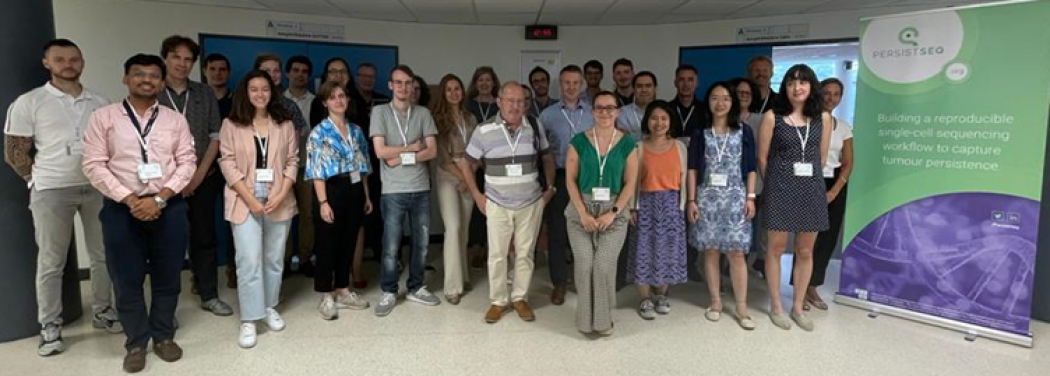
During the second PERSIST-SEQ meeting, project members shared their research on topics such as single-cell sequencing, single-cell acquisition from models of tumour plasticity, analytical methods and integration of single cell datasets, and spatial imaging technologies, among others.
Several consortium members held scientific talks on relevant to the project topics such as “Profiling of human and mouse cells in xenograft samples”, “Targeting vulnerabilities of drug tolerant persisters” and “Unravelling drug-tolerant persister cells in cancer using patient-derived organoids”.
At the start of the day, PERSIST-SEQ’s project evaluation group - work package 2 (WP2) spoke about the development and execution of the PERSIST-SEQ portfolio management plan. It’s goal is to match demand and supply of the screening capacity in PERSIST-SEQ, while balancing delivery and scientific risks vs. scientific impact.
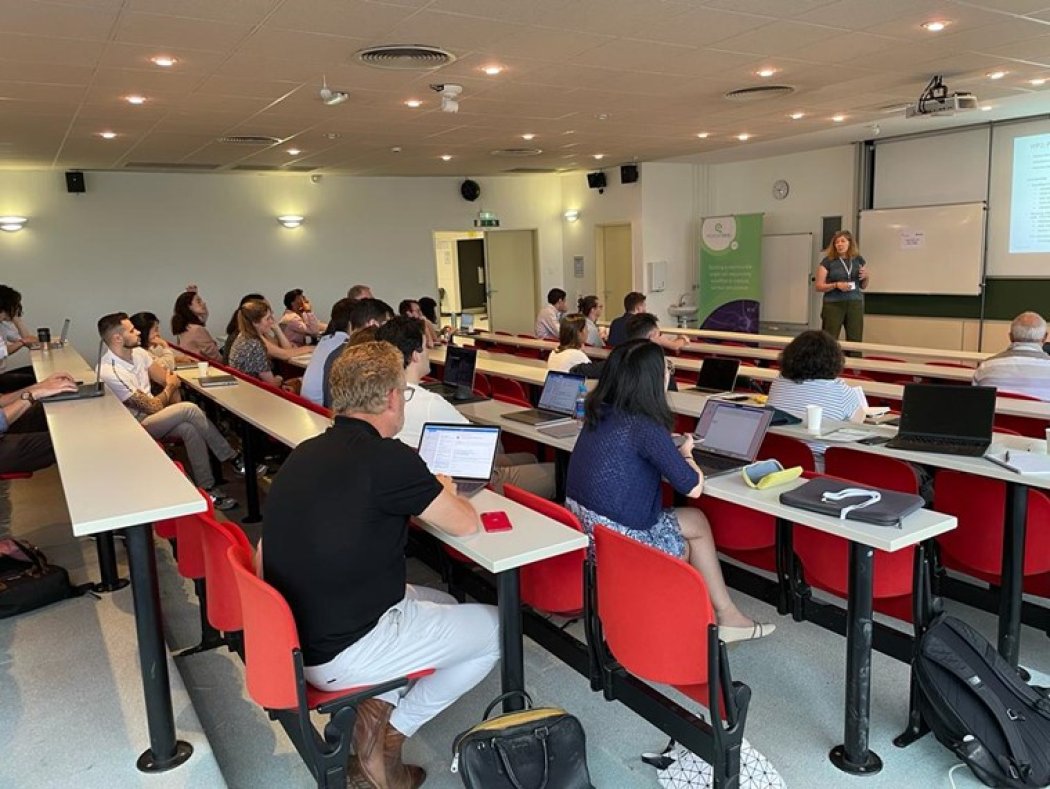
This group monitors the capacity and progression of the project portfolio. Additionally, it reviews and prioritizes new projects for sequencing. At the meeting, WP2 members presented updates to study technical plans and showed an overview of the samples sequenced to date.
Up to now, there have been 86,518 persister cells sequenced in PERSIST-SEQ, with lung cancer as the predominant tumour type and colorectal cancer coming second. Regarding sample types – leading are cell lines, with organoids as the second biggest group, patient biopsies – third, and cell line xenografts – the smallest.
PERSIST-SEQ researchers from another work stream spoke about single cell acquisition from models of tumour plasticity. The goal of this work is to create the means necessary to reliably acquire, label, and transport single-cell samples in such a way that the high quality, viability, and the heterogeneity of the samples is maintained.
Other project members shared their plans for the integration and interpretation of single-cell datasets, and the related use of analytical methods. This work stream aims to develop bioinformatics platforms and methods for data analysis of the single-cell sequencing workflow. This exercise is a very importance on insofar as the data gathered from (spatial) single-cell sequencing performed by other work streams needs to be quality-controlled, curated, analysed, integrated, shared, and interpreted.
Later on, project investigators presented their work on standardising and benchmarking of standard operating procedures, protocols, and standardised pipelines for single-cell isolation methods and (genetic, epigenetic, and transcriptomic) single-cell sequencing techniques.
Another topic discussed at the annual meeting was the leveraging of spatial transcriptomics techniques for the purposes of the research in PERSIST-SEQ since they add valuable insights to the single-cell sequencing data acquired in the project.
Looking ahead
The PERSIST-SEQ consortium looks forward to its third year of activities in which we will proceed with sequencing of samples and analysis of data, focusing on publishing our findings and disseminating results to the wider public.