

News
PERSIST-SEQ partners convene in Cambridge for the fourth annual consortium meeting
On 25 September, PERSIST-SEQ members gathered at the DISC facility of AstraZeneca in Cambridge for the fourth annual meeting. The event brought together project members from across Europe to share progress, exchange expertise, and strengthen collaborations. The full-day program combined project updates with cutting-edge scientific sessions, highlighting the consortium’s commitment to unravelling mechanisms of drug persistence in cancer.
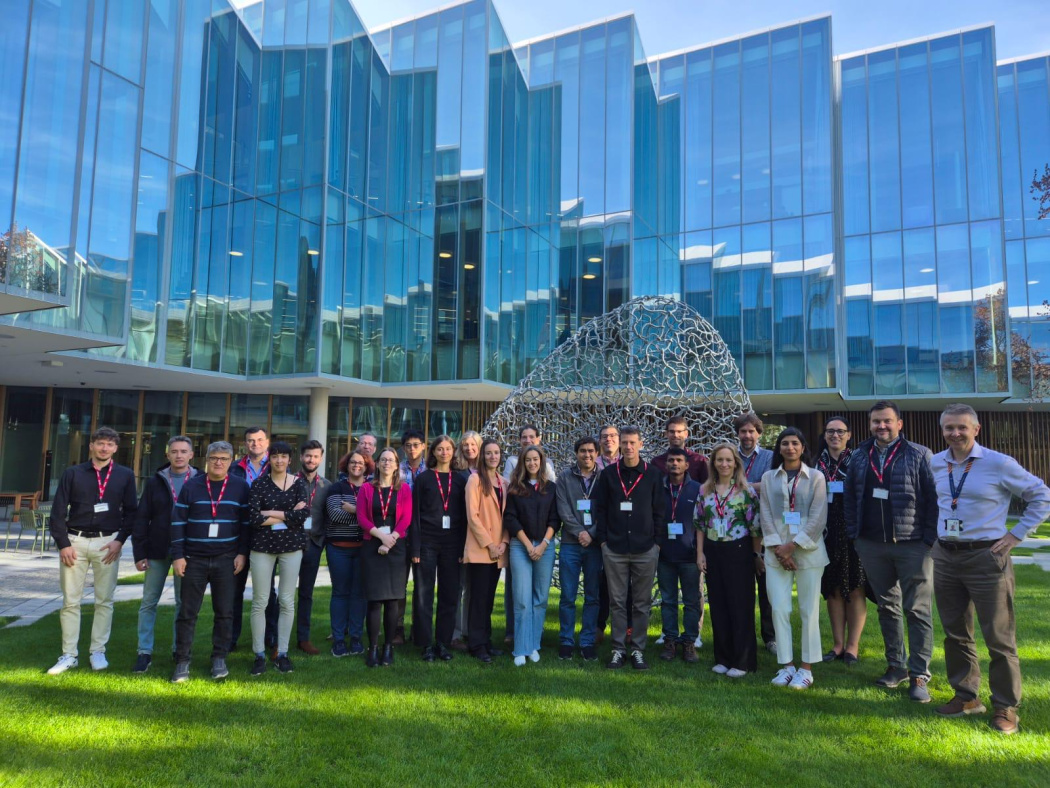
During the fourth consortium meeting, PERSIST-SEQ members shared their work on single-cell sequencing, heterogeneity in cancer cells, drug-tolerant persistance modelling, transcriptional profiles, persister cells’ plasticity programs, and sustainability of project results, among others.
The meeting opened with a warm welcome from PERSIST-SEQ’s project leaders, Alexander van Oudenaarden and Ultan McDermott, looking back on a successful year of activities and who set the stage by emphasizing the importance of continued collaboration. This was followed by updates on project management and work packages, with Natasja van Velthoven (Lygature) providing insights into long-term sustainability, dissemination, and ethics, and Viia Valge-Archer (AstraZeneca) presenting the technical plan overview.
Alexander van Oudenaarden and Ultan McDermott, PERSIST-SEQ’s leadsTo this date, we have sequenced 2 million cells, let’s aim to have 10 million cells sequenced within PERSIST-SEQ.
Scientific program
The scientific program began with a presentation from Zijian Fang (SANG), who explored cancer-associated fibroblasts and drug persistence in organoid models. Next, Hector Garcia Palmer (VHIO) shared new perspectives on persistence in BRAF mutant colorectal cancer.
Continuing on this theme, Elisa Mariella (IFOM) examined approaches to robustly define transcriptional heterogeneity in human cancer cell lines before and after drug treatment, sparking engaging discussions among the participants.
Following the lunch break, the focus shifted to patient-derived models and preclinical insights. Yasmine Abouleila (HUB) presented her work on drug-tolerant persistence in FOLFIRI-treated colorectal cancer organoids, while Adria Jaume Roura (IRB) highlighted evolving transcriptional profiles of persister cells in mouse colorectal cancer models with specific driver pathway mutations.
In a joint session, Pablo Moreno, Kathryn Weinand, and Daniel Guerrero Romero (AstraZeneca) demonstrated integrative approaches to decipher plasticity programs in EGFR mutant lung cancer. The later afternoon sessions opened new perspectives on experimental techniques. Bjorn van Sambeek (Hubrecht) presented innovative work on moving mechanobiology into three-dimensional systems, expanding the toolkit available for studying drug persistence.
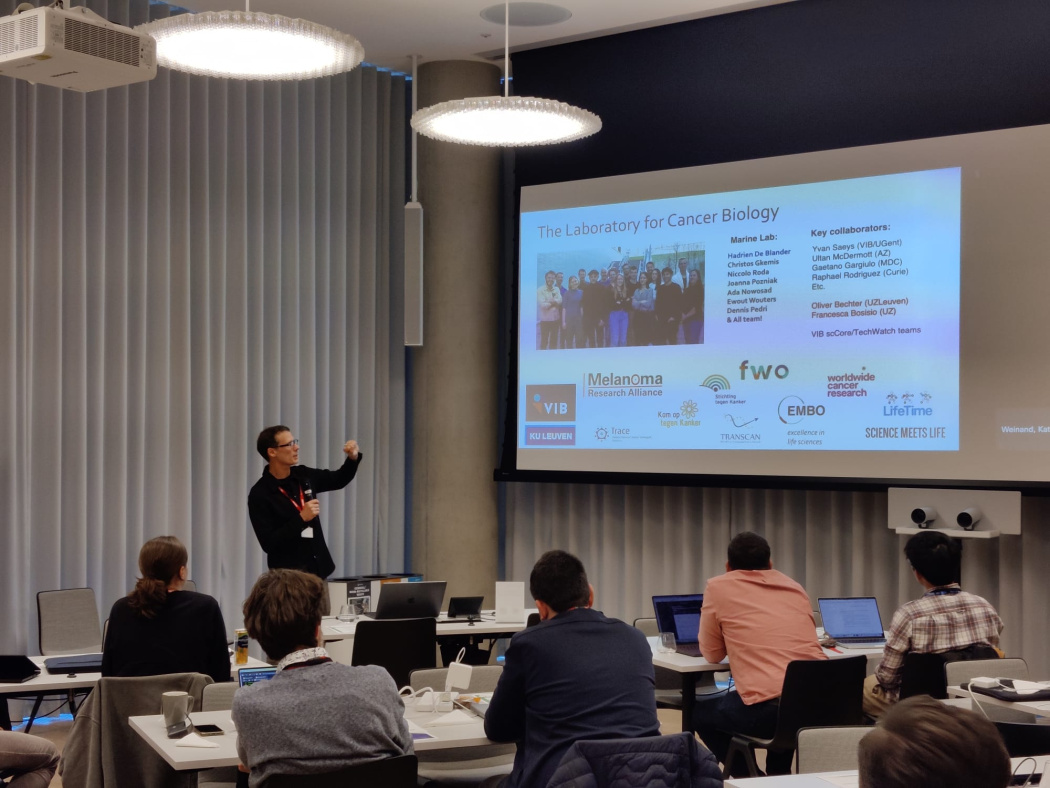
The highlight of the day followed with the keynote lecture delivered by Chris Marine, who introduced a cell geometry framework designed to monitor cell state diversity and plasticity with the ultimate goal of mitigating therapy resistance. His talk resonated strongly with the consortium’s central mission and sparked lively exchanges among attendees.
The way forward
The meeting concluded with a wrap-up by PERSIST-SEQ’s leaders, who reflected on the consortium’s achievements to date and the collaborative spirit driving the project forward. Like every year, the annual meeting underlined the strength of PERSIST-SEQ’s multidisciplinary network, bringing together basic research, translational studies, and industry expertise. As the project progresses, these collective efforts aim to bring new strategies for overcoming drug persistence in cancer closer to reality.