

News
PERSIST-SEQ gathers project members in Utrecht for a third consortium meeting
On the 24th & 25th of September, PERSIST-SEQ’s project members met for the third annual consortium meeting in Utrecht, the Netherlands. The event gathered consortium members from various work streams, who discussed the progress of their work and shared ideas for the way forward for the analysis of data. The meeting was also attended by scientific advisory board members, and the IHI Project Officer.
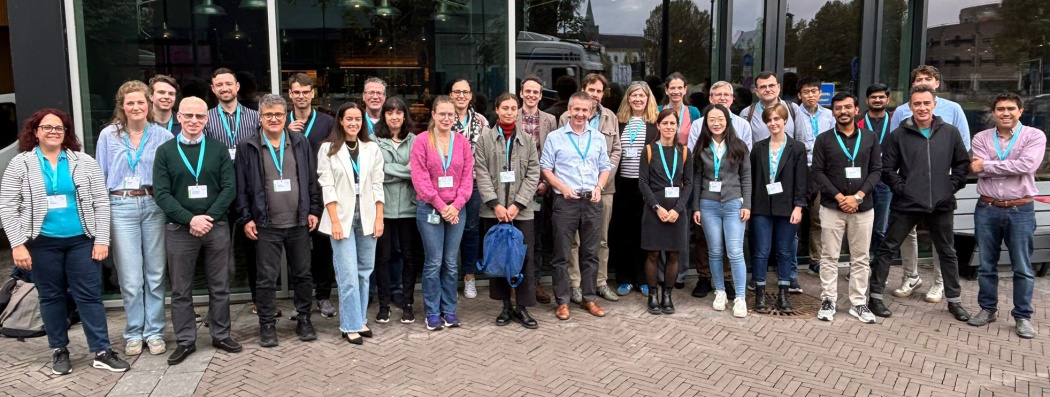
During the third consortium meeting, PERSIST-SEQ members shared their research on topics such as single-cell sequencing, single-cell acquisition from models of tumour plasticity, characterisation of drug-tolerant persister cells, spatial imaging technologies, and sustainability of project results, among others.
PERSIST-SEQ’s project leaders - Alexander van Oudenaarden (Hubrecht Institute) and Ultan McDermott (AstraZeneca), opened the meeting by welcoming all participants and congratulating everyone on a successful year of activities.
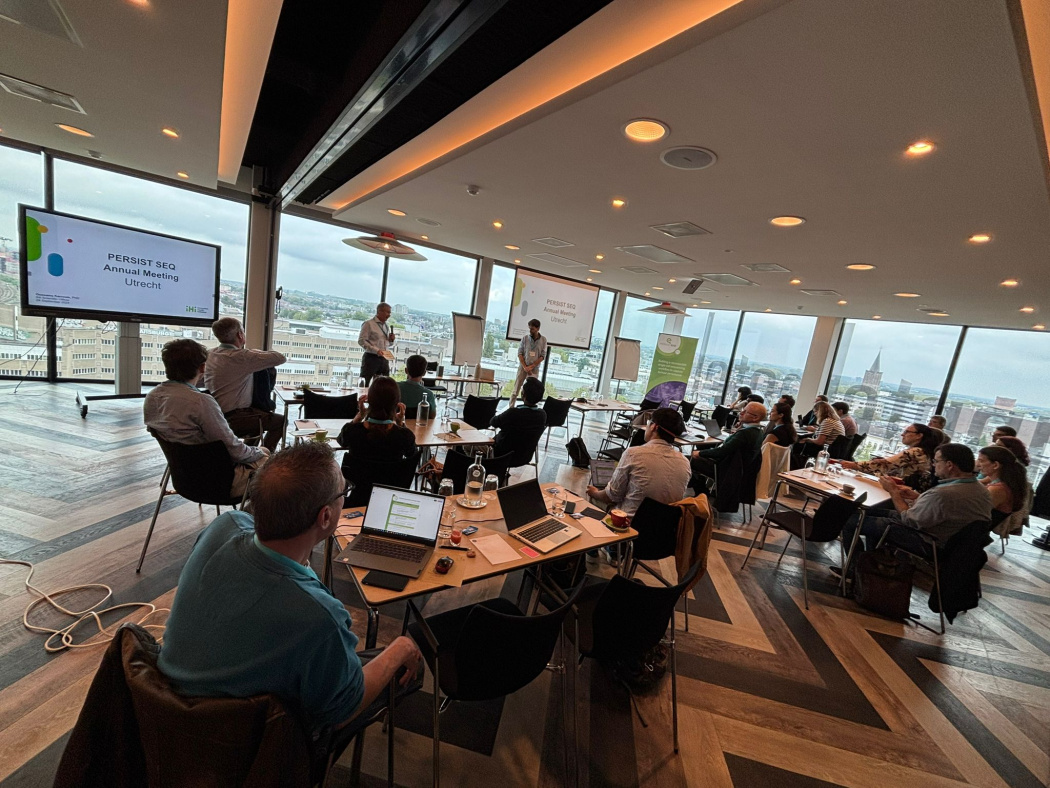
Oussama Karroum - program officer representing PERSIST-SEQ’s funder – the Innovative Medicines Initiative (IHI – formerly IMI), explained the differences between the focus of the work of the IMI and the IHI and how one can get involved with IHI’s work. Oussama reflected on the progress of the PERSIST-SEQ project since its start and emphasized the need to communicate about project milestones and results to external stakeholders and the wider public.
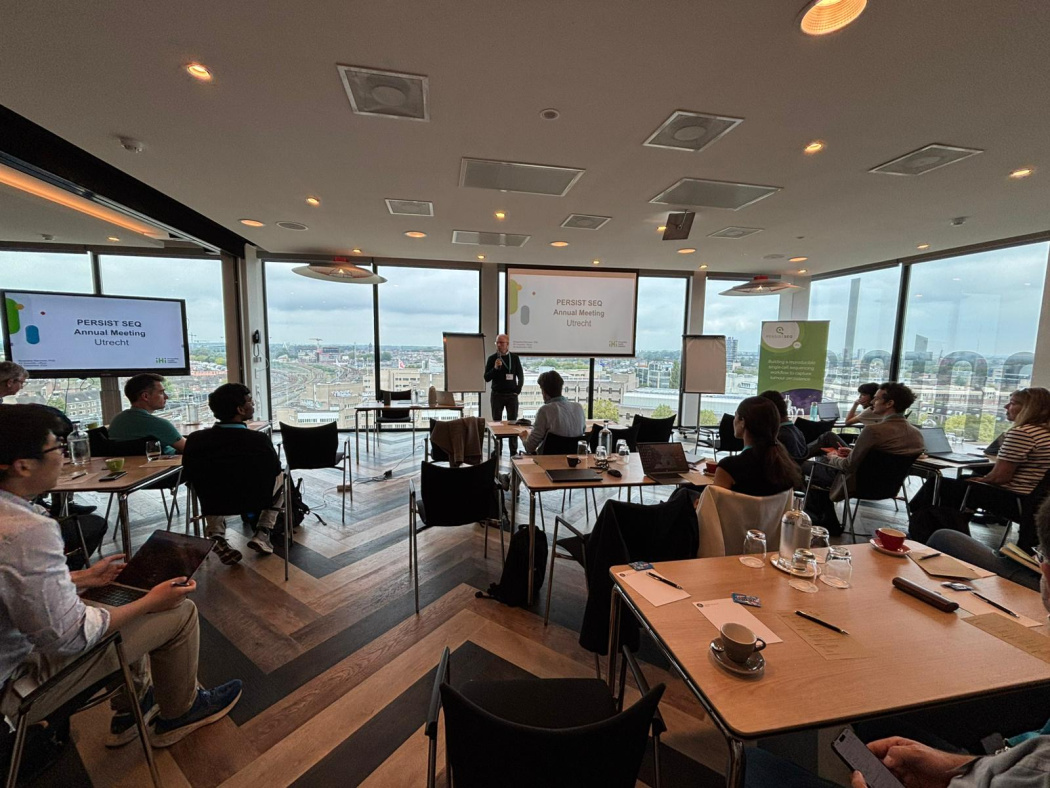
Viia Valge-Archer (AstraZeneca) representing PERSIST-SEQ’s project evaluation group - work package 2 - discussed the portfolio management, coordination and prioritization work in PERSIST-SEQ. The goal of this work is to develop and execute a portfolio management plan to match demand and supply of the screening capacity in the project while balancing delivery and scientific risks versus scientific impact. This workstream manages the process of submission and review of proposals for study technical plans which enter the sequencing pipeline in PERSIST-SEQ.
Viia presented an overview of PERSIST-SEQ’s study technical plans and the samples sequenced to date. She reported that there has been a substantial improvement of the number of plans submitted and approved in the portfolio. “As SOPs are increasing, we’re getting more organoid and in-vivo studies in addition to cell line studies, which moves us to more challenging and complex scientific studies”, Viia said.
Read the interview with AstraZeneca’s project leads (Ultan McDermott and Viia Valge-Arc) to learn more about AstraZeneca’s role in PERSIST-SEQ.
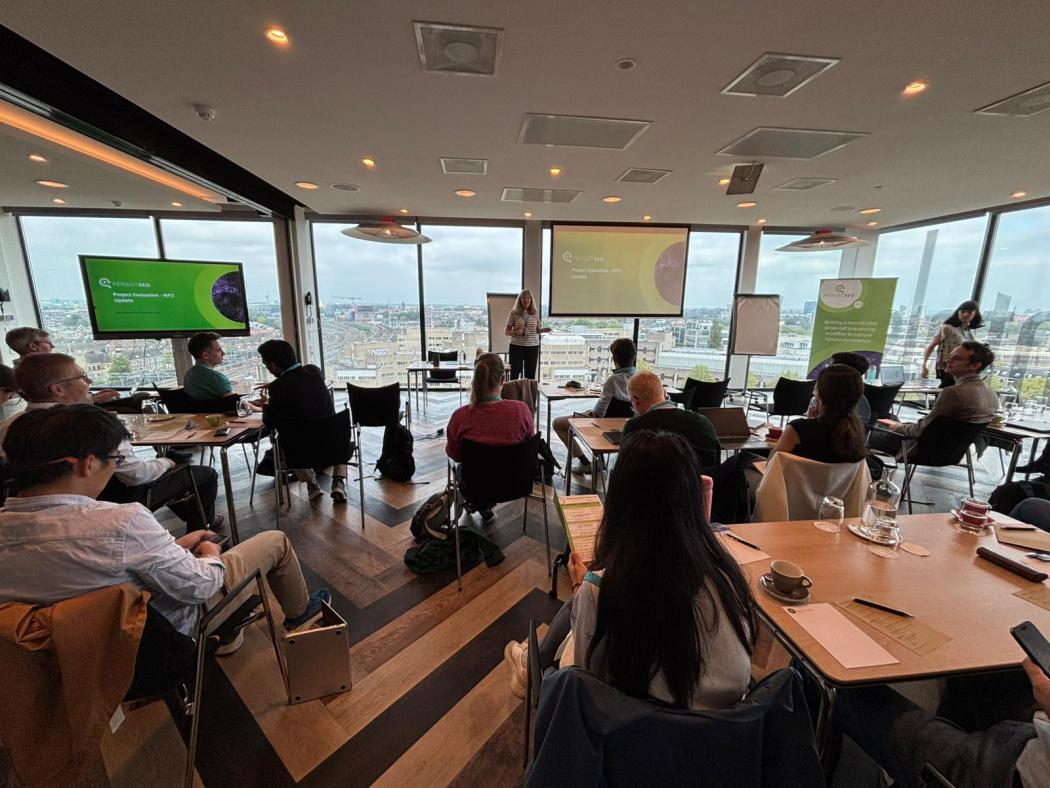
Viia Valge-Archer, AstraZeneca"Up to now, there have been a total of 1 684 203 single cells sequenced in PERSIST-SEQ (out of which 422 370 were persister cells), with lung cancer as the predominant tumour type and colorectal cancer coming second."
"Regarding sample types – leading are organoids, with cell lines as the second biggest group, cell line xenografts – third, GEMM – fourth, PDX – fifth, and patient biopsies – last." - Viia added.
Scientific talks
Several consortium members held scientific talks on relevant to the project topics such as “Study of Chemotherapy Persistence in 3D NSCLC models and evaluate the impact of Oncolytic Viruses on them”, “Insights into drug tolerance/resistance in cancer: generation of persister PDO models against standard of care treatments?” and “Characterizing the evolving transcriptional profiles of DTPs in mouse colorectal cancer organoids with specific driver pathway mutations.” Additionally, the keynote speaker and Scientific Advisory Board member, Fabian Theis, was invited to present on the topic of “Generative AI for learning cellular perturbations”.
Lab tour at Single Cell Discoveries
On the first day of the meeting, consortium members visited the lab of Single Cell Discoveries - PERSIST-SEQ’s consortium partner who provides one centralized place where all samples in the project are processed and data is generated. Project members received a tour of the machines used for sequencing and learned about how samples are processed.
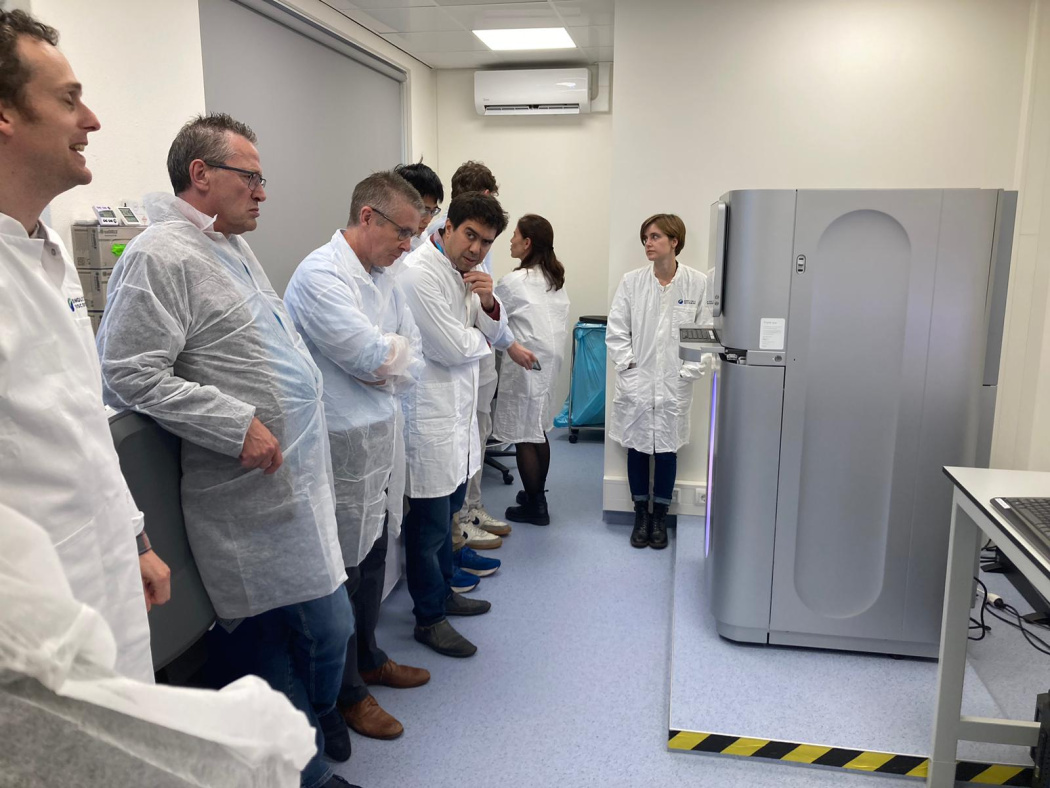
Read the interview with Single Cell Discoveries’ CEO Mauro Muraro to learn more about the role of Single Cell Discoveries in the project.
The way forward
The consortium looks forward to its fourth year of project activities in which the focus will lie on sequencing of samples, data analysis, publishing project findings and disseminating project results among the scientific community, other external stakeholders and the wider public.