

Home
News
27
Results found
-

PERSIST-SEQ Extended to 2027 to Strengthen Research on Cancer Therapy Resistance
The PERSIST-SEQ project will be extended by 18 months, with a new end date of 31 December 2027. This no-cost extension, granted by the project funder IHI JU , ensures that the consortium can fully deliver on its scientific objectives and maximise the impact of its research into cancer therapy resistance. -
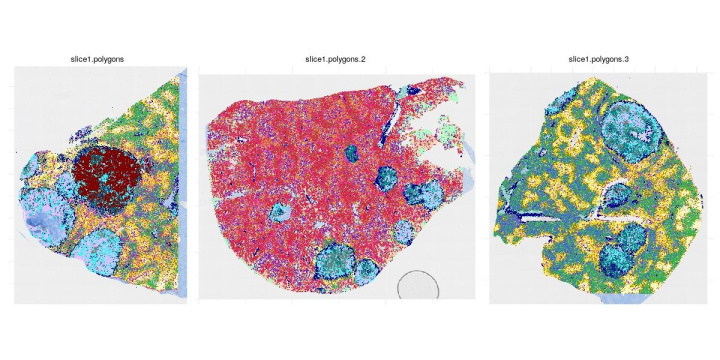
Exploring Transcriptomics to Reveal the Roots of Therapy Resistance in Cancer
One of the biggest challenges in cancer treatment is understanding why some tumour cells withstand therapy and go on to relapse. Within the PERSIST-SEQ project, researchers are combining powerful experimental models with advanced analytical technologies to uncover the molecular changes that allow certain cells to tolerate treatment and evolve into resistant disease. -

Welcome to the third issue of our e-newsletter
Below you can find our third newsletter with news and updates from PERSIST-SEQ. -

New Research Identifies BET Inhibitors as Key to Overcoming Cancer Therapy Resistance
The IHI-funded PERSIST-SEQ consortium has developed workflows that allow for a standardized approach by which knowledge of identification and targeting of drug-tolerant persisters (DTPs) in cancer can be translated into better diagnostics and therapeutics for patients. -

From Single Cells to Actionable Insights: How WP7 Powers Data Integration in PERSIST-SEQ
Why do some cancer cells survive therapy—and how do they eventually give rise to drug resistance? Answering this question requires not only cutting-edge experimental models, but also a robust analytical framework capable of integrating complex single-cell data across technologies, models, and timepoints. -
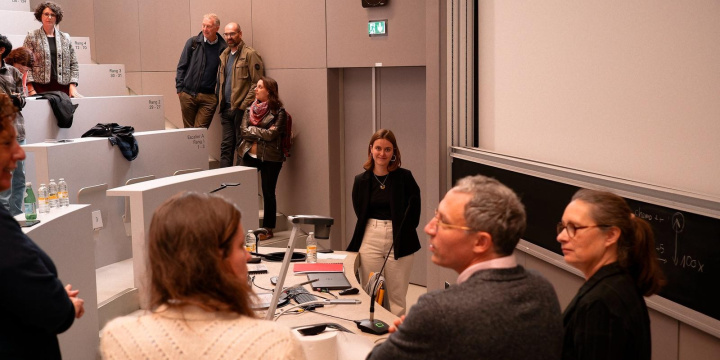
Clara Fauveau successfully defended her PhD on tumour persistence
On the 30th of September, Clara Fauveau successfully defended her PhD thesis on tumour persistence. She pursued her PhD in the PERSIST-SEQ project through a collaboration between Transgene and the Institute of Genetic, Molecular and Cellular Biology (IGBMC) in Strasbourg, France. -
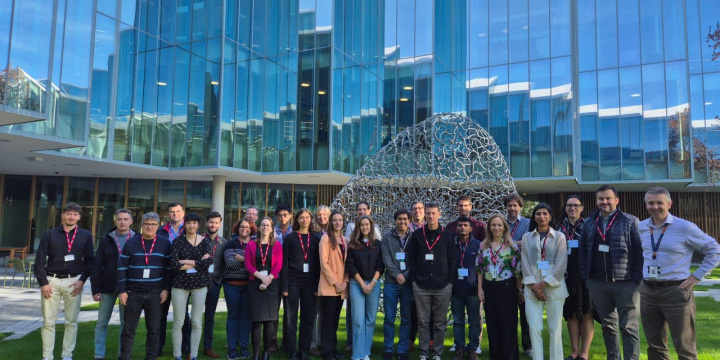
PERSIST-SEQ partners convene in Cambridge for the fourth annual consortium meeting
On 25 September, PERSIST-SEQ members gathered at the DISC facility of AstraZeneca in Cambridge for the fourth annual meeting. The event brought together project members from across Europe to share progress, exchange expertise, and strengthen collaborations. -
PERSIST-SEQ Video Series: Collaboration in Cancer Research on Therapeutic Resistance
What makes certain cancer cells survive even the most advanced treatments? And what can we do about it? -
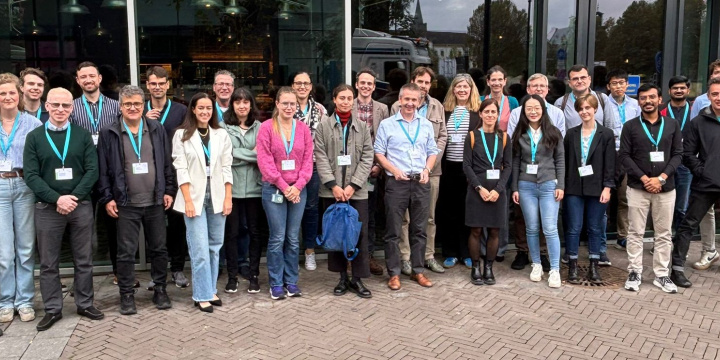
PERSIST-SEQ gathers project members in Utrecht for a third consortium meeting
On the 24th & 25th of September, PERSIST-SEQ’s project members met for the third annual consortium meeting in Utrecht, the Netherlands. The event gathered consortium members from various work streams, who discussed the progress of their work and shared ideas for the way forward for the analysis of data. -
Welcome to the second issue of our e-newsletter
Below you can find our second newsletter with news and updates from PERSIST-SEQ. -
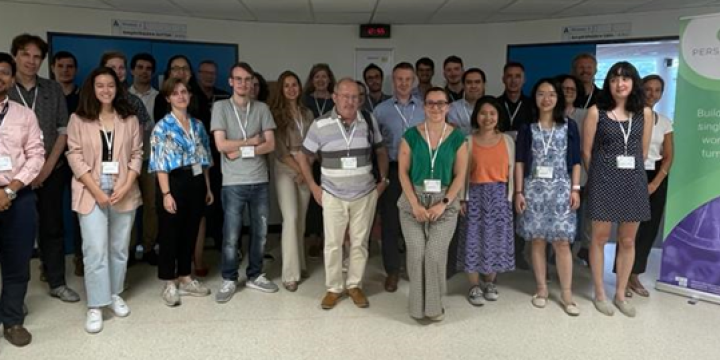
PERSIST-SEQ consortium members meet in Strasbourg to discuss work progress and plans for the next period
The second annual PERSIST-SEQ meeting took place on the 30th of June in Strasbourg, France. The event was organised in a hybrid setting and gathered 40 project members in person, and the rest – online. -
Oncode Institute in PERSIST-SEQ: managing dissemination, stakeholder engagement and sustainability of project results
Oncode Institute is a virtual fundamental cancer research institute aiming to accelerate breakthrough discoveries and speed up their translation into new diagnostics and treatments for cancer patients. Oncode Institute coordinates the PERSIST-SEQ project and has a supporting role in the project management and financial management activities. -
Single-cell sequencing techniques to unveil the mechanisms driving the activation of adaptive mutability in colorectal cancer persister cells
When cancer cells are challenged with targeted therapies, both pre-existent resistant cells and drug-tolerant persisters cells can survive the lethal effect of the drugs. Investigators at the IFOM lab recently unravelled previously unknown vulnerabilities of colorectal cancer cells that survived lethal doses of targeted therapies which could be exploited therapeutically. -

Charles River delivers non-small cell lung cancer samples and patient-derived xenografts for use in PERSIST-SEQ’s research
In the PERSIST-SEQ consortium, CRL brings it longstanding management expertise, as well its industry know-how and standards with regards to GDPR, animal welfare and patient informed consent especially in the context of generation and usage of patient derived xenografts. -
The potential of patient-derived xenografts as advanced models to enable development of new antioncogenic treatments
Current experimental approaches fail to isolate and study residual disease and therapeutic resistance in cancer in clinically meaningful ways. Novel single-cell sequencing techniques and advanced ex-vivo and in-vivo cancer modelling approaches, such as patient-derived organoids and xenografts, may finally unveil the intricate processes underlying therapeutic resistance in cancer.